PGXKLA
Klarna
We built Klarna's Search and Compare app for the Shopify App Store. A self-serve solution that automates merchant onboarding, syncs product data with Klarna's platform, and removes the manual work in getting your products synced to Klarna. The app is live, scaling, and still evolving.
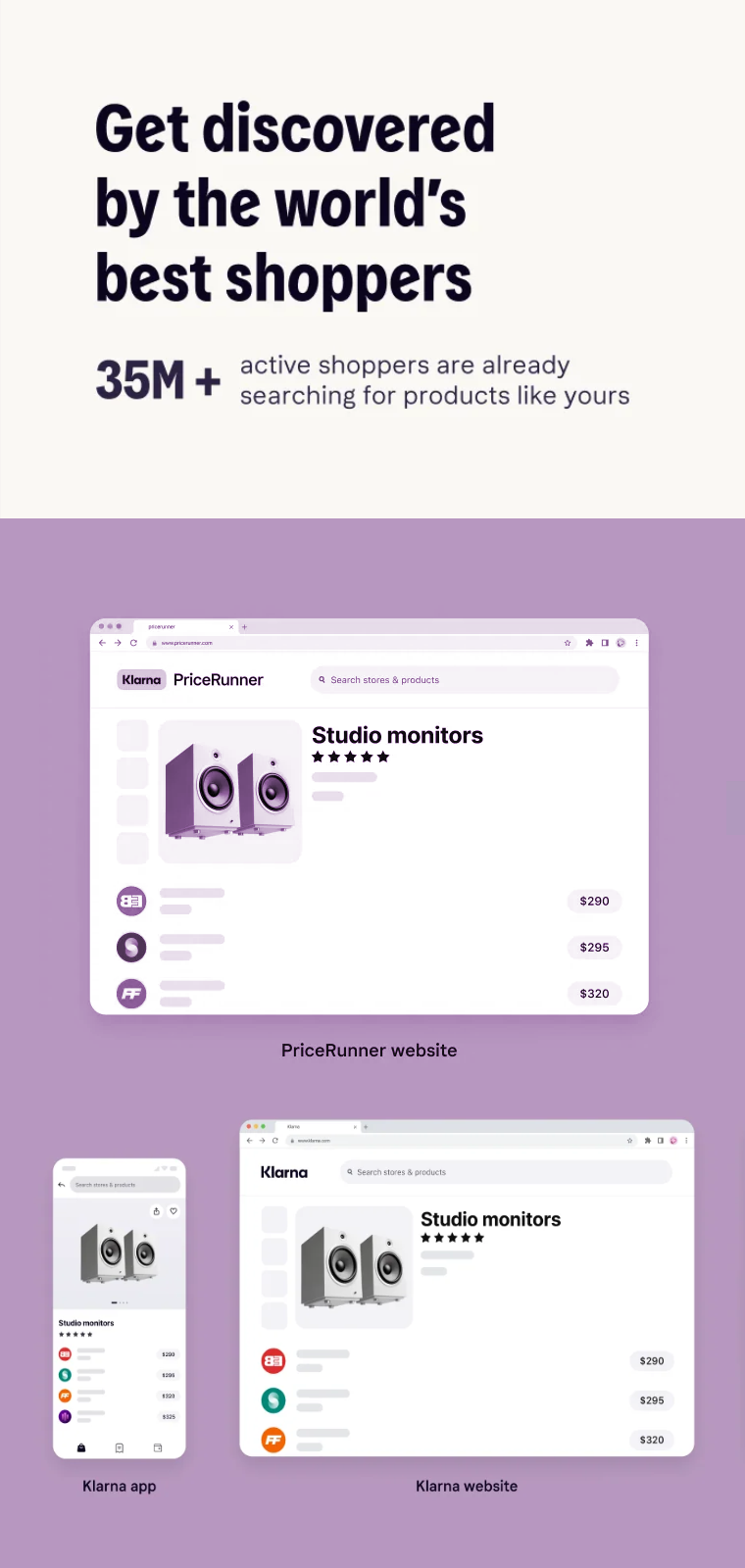

From manual to fully automated flows
Klarna's previous onboarding flow relied on manual processes that created bottlenecks and data errors. We replaced it with an automated pipeline where merchants onboard themselves, product feeds are validated on the fly, and data flows straight into Klarna's systems.
End-to-end merchant self-service
Eligibility checks, country-specific configuration, Klarna registration, immediate first feed generation, rejection handling, and optional spending-limit approval form one guided workflow. The same lifecycle architecture removes feeds, logos, schedules, billing data, and personal data on uninstall/redaction.

— Panagora’s long expertise in e-commerce and Shopify technology helped us create a self-serve, scalable solution that simplifies merchant onboarding and ensures data accuracy in our systems.
David Fock, Chief Product & Design Officer
Market-accurate catalog syndication
Bulk GraphQL queries incorporate country publication state, contextual prices, market-specific translations, metafields, delivery profiles, and shipping costs.
For merchants this means they can add field mappings, fallback values, and collection-based inclusion/exclusion rules. A memory-bounded streaming pipeline generates multiple localized XML feeds concurrently, uploads them to file storage, and avoids unnecessary updates when content is unchanged.
Flexible billing, designed around merchant trust
The app turns usage-based pricing into a clear, merchant-controlled experience. Merchants receive free monthly usage, choose their own spending limit, approve it securely through Shopify, and retain control over future costs. Behind the experience is a proven, reusable billing foundation that handles subscriptions, charges, retries, credits, and reconciliation which gives future app projects a faster and more reliable path to monetization.
Reliable operations built in from day one
The app’s cloud infrastructure is automated and repeatable, covering serverless computing, API management, managed data storage, scheduled workflows, secure configuration, monitoring, and incident alerts.
This reusable operational foundation makes deployments safer, problems easier to detect, and environments more consistent—giving future clients a production-ready starting point instead of rebuilding essential infrastructure for every app.